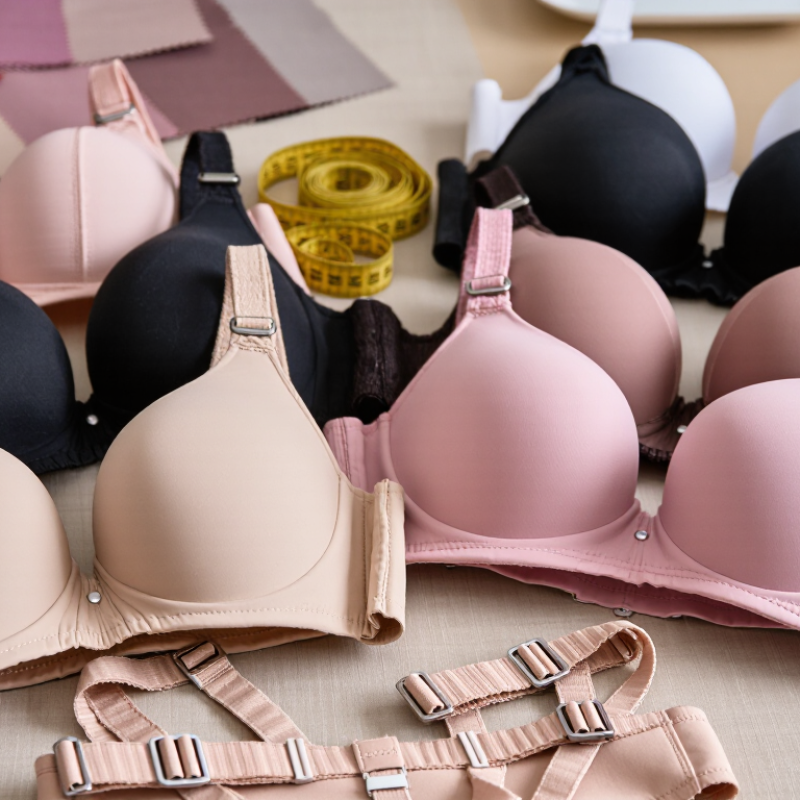
Choosing China’s top Plus Size Bra suppliers requires more than comparing prices or factory photographs. Global buyers need evidence of consistent fit, stable materials, ethical production, and dependable export experience. A strong supplier should explain cup grading, underwire adjustments, band support, and size development beyond a simple enlarged pattern. Real fit testing matters. A 44G bra must support weight comfortably, without cutting into the back or shifting during movement.
Cora Harrington, a respected lingerie writer and fit advocate, stated, “Lingerie is not a luxury. It is a necessity.” Her words underline the responsibility behind every sourcing decision. A Plus Size Bra is not merely a larger product. It must address breast support, comfort, movement, and confidence in practical ways. Suppliers should provide measurement charts, sample records, fabric compositions, testing reports, and clear production timelines. Certifications and factory audits can strengthen trust, but documents alone are not enough.
This guide examines Chinese suppliers through a buyer’s real-world lens. It considers product quality, customization, minimum order quantities, communication, packaging, and shipping reliability. Particular attention goes to elastic recovery, breathable lining, reinforced seams, and adjustable straps. Small details matter. A weak hook can ruin an otherwise excellent bra.
No supplier is perfect, and no checklist removes every risk. Some factories communicate well but lack advanced plus-size grading experience. Others offer impressive samples but struggle with repeat production. Buyers should request multiple samples, test them on different body shapes, and record every correction. That extra work may feel inconvenient. It often prevents expensive mistakes later.
China’s plus size bra manufacturing market is built around specialized grading, flexible production, and strong textile supply chains. Larger sizes need more than simply enlarging standard patterns. They require stable bands, supportive cup structures, wider straps, and carefully tested underwire channels.
Experienced buyers often begin with a technical specification sheet and several fit samples. Factories should explain fabric composition, stretch recovery, stitching density, and size grading methods. On-site or third-party inspections can review seam strength, measurement accuracy, color consistency, and packaging. Wash testing also matters because elastic can weaken after repeated use. A factory may produce attractive samples but still struggle with consistent bulk orders. That gap deserves attention.
Tips: Request samples in several plus sizes, not only one. Check comfort during movement, sitting, and daily wear. Ask for recent production photos, quality records, and clear lead-time details. Confirm whether the supplier can support small trial orders before scaling. Do not rely on catalog images alone. They can hide weak construction. My own view is that communication often matters as much as machinery. A missed measurement can create expensive revisions. Buyers should keep written approvals for patterns, materials, colors, labels, and inspection standards. Reflect on every fitting issue before final production.
This chart presents the commonly used Chinese/EU 5 cm band-size ladder and its corresponding underbust measurement range. Larger band sizes are often included in plus-size sourcing programs, although the definition of “plus size” varies by market and cup volume must be evaluated separately. Global buyers should confirm each supplier’s grading rules, cup construction, stretch ratio, and finished measurement chart before placing an order.
China Top Plus Size Bra Suppliers for Global Buyers
Evaluating Chinese plus size bra suppliers requires more than checking catalog photos. Start with size development experience. Ask whether the supplier uses real fitting data for fuller busts, wider bands, and different cup shapes. Request a measurement chart, grading rules, and a physical sample in your target size. Inspect the underwire, strap width, hook strength, and side support. Small details matter during long wear.
Production reliability also deserves close attention. Review factory capacity, minimum order quantities, lead times, and quality control records. Ask how inspectors check stitching, elastic recovery, colorfastness, and final measurements. Suppliers should provide clear test documentation and explain applicable market requirements. A video audit can reveal useful details, but it cannot replace independent verification. No checklist is perfect. Even experienced buyers may overlook inconsistent cup depth between sizes.
Tips: Compare at least three suppliers using the same technical brief. Keep approved samples for future inspections. Discuss fabric composition, packaging, labeling, and defect tolerances in writing. Test wash durability before placing a large order. Communication quality is another practical signal. Slow replies, vague measurements, or changing prices may create problems later. A supplier that admits production limits can be more dependable than one promising everything. Reliable cooperation is built through evidence, not attractive claims.
China Top Plus Size Bra Suppliers for Global Buyers
Leading Types of Plus Size Bra Suppliers in China
China’s plus size bra supply chain includes OEM factories, ODM manufacturers, specialized lingerie factories, and sourcing companies. OEM suppliers produce according to your patterns, labels, materials, and packaging. ODM suppliers offer existing designs, then adjust cup shapes, straps, colors, and support levels. Specialized factories usually understand fuller-bust fitting better. They may provide stronger side panels, wider bands, reinforced seams, and carefully graded cups.
Some integrated manufacturers manage fabric purchasing, cutting, sewing, inspection, and packing under one roof. This can improve communication and production control. Small-batch suppliers are useful for testing new sizes or seasonal collections. However, their unit prices may be higher. Trading companies can connect buyers with several factories, but product information needs closer verification. A polished catalogue is not proof of technical ability.
Tips: Request a size-set sample, not only one sample. Check band recovery, cup balance, strap width, and stitching after washing. Ask for measurement charts with clear tolerance ranges. Confirm whether materials have relevant safety documentation for your target market. Factory audits, production photos, and sample comments should support each other. Still, no supplier is perfect. Even an experienced factory may need several fitting rounds for extended sizes. A buyer should record every correction, because small pattern changes can affect comfort, support, and final costs.
| Supplier Type | Typical Product Focus | Common Plus-Size Range | Typical MOQ | Customization Capability | Common Materials | Suitable Buyer Profile | Key Evaluation Points |
|---|---|---|---|---|---|---|---|
| Direct Bra Manufacturer | Underwire bras, full-coverage bras, balconette bras, minimizer bras, and everyday support styles | Band: 36–52 Cup: C–J |
Usually 300–1,000 pieces per style, depending on fabric, color, and development requirements | High; pattern development, cup and band grading, private labels, custom colors, labels, packaging, and fit samples | Polyamide, polyester, elastane, cotton blends, microfiber, mesh, lace, and powernet | Established retailers, lingerie brands, importers, and long-term wholesale buyers | Check fitting expertise, size grading accuracy, sample approval process, production capacity, and quality-control procedures |
| OEM/ODM Lingerie Factory | Newly designed plus-size collections, seasonal ranges, seamless styles, sports bras, and nursing bras | Band: 36–54 Cup: C–K |
Often 500–2,000 pieces per design; lower quantities may be possible for existing materials and patterns | Very high; design support, technical packs, custom molds, functional construction, branding, and packaging | Recycled polyamide, elastane blends, cotton jersey, spacer fabric, lace, molded foam, and breathable mesh | Brands seeking differentiated products or a complete product-development partner | Review technical development capability, intellectual-property terms, mold ownership, testing documentation, and lead times |
| Wholesale Stock Supplier | Ready-to-ship basic bras, lace bras, wire-free bras, minimizers, and value-oriented multipacks | Band: 38–52 Cup: C–H |
Commonly десятки to several hundred pieces per color or style, subject to available inventory | Low; usually limited to labels, packaging, color selection, and mixed-size assortments | Polyester, polyamide, elastane, cotton blends, lace, and standard lining fabrics | Online sellers, boutique wholesalers, trial buyers, and retailers needing faster replenishment | Confirm actual inventory, size-ratio availability, color consistency, packaging standards, and reorder stability |
| Seamless Underwear Factory | Wire-free bras, comfort bras, bralettes, smoothing bras, and lightweight everyday support products | Band: 36–50 Cup: C–H |
Usually 500–2,000 pieces per color and style, depending on knitting setup and yarn requirements | Medium to high; knitted patterns, compression zones, logo application, color matching, and packaging | Nylon, polyamide, elastane, recycled yarns, breathable knitted blends, and moisture-management fibers | Comfort-focused brands, shapewear retailers, athleisure sellers, and subscription businesses | Assess stretch recovery, support level, rolling resistance, wash durability, heat management, and size consistency |
| Sports Bra Manufacturer | Low-, medium-, and high-support sports bras for walking, training, running, and plus-size activewear | Band: 36–52 Cup: C–J |
Typically 500–1,500 pieces per style, with higher MOQs for custom performance fabrics | High; support-level engineering, back constructions, removable cups, reflective details, and moisture-control features | Polyester-spandex, nylon-spandex, recycled polyester, mesh, spacer fabric, and elastic performance trims | Activewear brands, fitness retailers, sports distributors, and inclusive-size apparel businesses | Test bounce control, seam comfort, moisture management, colorfastness, elastic recovery, and movement performance |
| Maternity and Nursing Bra Factory | Wireless nursing bras, drop-cup bras, maternity support bras, and adaptable comfort styles | Band: 36–50 Cup: C–H |
Commonly 300–1,000 pieces per style, subject to hardware and fabric availability | High; nursing clips, multi-position straps, flexible cup construction, custom fit blocks, and branded trims | Cotton, modal, polyamide, elastane, bamboo-blend fabrics, soft elastic, and breathable lining materials | Maternity retailers, family-product distributors, e-commerce brands, and hospital or specialty stores | Check hardware safety, ease of one-hand opening, fabric softness, support after repeated washing, and size grading |
| Medical and Post-Surgery Bra Supplier | Front-closure bras, compression bras, recovery bras, and soft-support garments for post-procedure use | Band: 36–50 Cup: B–H |
Often 300–1,000 pieces per style; specialized constructions may require larger development commitments | Medium to high; closure placement, compression zones, seamless construction, pockets, and medical-use packaging | Soft polyamide, elastane, cotton blends, spacer fabric, breathable mesh, and low-irritation elastics | Medical distributors, recovery-wear retailers, specialty e-commerce sellers, and healthcare procurement buyers | Verify compression performance, skin-contact materials, seam placement, wash durability, documentation, and applicable market requirements |
| Sustainable Lingerie Manufacturer | Eco-focused full-coverage bras, wire-free bras, recycled lace styles, and traceable capsule collections | Band: 36–50 Cup: C–H |
Usually 500–1,500 pieces per style, depending on certified fabric minimums and color selection | High; material sourcing, recycled-content options, custom labels, packaging, and sustainability documentation | Recycled polyamide, recycled polyester, organic cotton, TENCEL™ fibers, elastane blends, and recycled lace | Ethical fashion brands, eco-conscious retailers, and buyers with sustainability reporting requirements | Request valid material certificates, chain-of-custody information, recycled-content evidence, packaging details, and factory audits |

Note: The ranges and order quantities shown are common industry guidelines for China-based production and wholesale sourcing. Actual size availability, MOQ, materials, lead time, testing, and customization terms must be confirmed with each qualified supplier.
China Top Plus Size Bra Suppliers for Global Buyers?
How Global Buyers Can Verify Quality, Compliance, and Capacity
A reliable supplier should prove more than attractive samples. Request recent ISO 9001 records, factory licenses, testing reports, and customer references. ISO’s 2022 Survey recorded more than 1.2 million ISO 9001 certificates worldwide. However, certification does not guarantee consistent bra production. Verify the certificate number directly with the issuing body. Then compare its address with the factory location.
Inspect the sample room, cutting area, sewing lines, and finished-goods warehouse. Measure band recovery, cup symmetry, underwire placement, strap strength, and wash performance. Ask for production records from a similar plus-size order. Capacity claims should match machines, operators, shifts, and monthly output. A factory quoting 100,000 pieces monthly needs visible planning evidence. Do not rely on photographs alone. They can be outdated.
Tips: Use AQL-based inspections and independent laboratory testing. Check colorfastness, nickel release, fiber content, and harmful substances against the destination market’s rules. The OECD Due Diligence Guidance for Garment and Footwear recommends risk-based supplier checks, not one-time paperwork. Keep signed specifications and approval samples. One weakness remains: audits show conditions on one day. Repeat checks during production. Reliability is built through evidence, not confident promises.
China’s plus size bra suppliers vary widely in fit expertise, production scale, and export experience. Global buyers should request factory profiles, product photos, size charts, and recent sample measurements. Do not rely on a single chart. A 95G in one market may not match another market’s cup depth or band tension. Test samples on real fit models when possible. Check stitching, elastic recovery, hook strength, lining comfort, and wash performance. Small details matter.
Pricing usually depends on fabric, lace, hardware, cup construction, order volume, and packaging. Ask for a detailed quotation, not only a unit price. Confirm whether it covers sampling, labels, cartons, inspection, and export documentation. Compare EXW, FOB, and delivered pricing carefully. A cheaper quote may exclude several costs. Payment terms also affect risk. Many buyers overlook sample fees and remake charges. That is an avoidable surprise.
Shipping plans need realistic timing. Production may take several weeks after approval, while ocean freight requires additional booking and customs time. Air shipping is faster but can sharply increase landed cost. Provide accurate carton dimensions and weights before placing the order. Request a pre-shipment inspection, especially for size consistency across larger runs. Keep invoices, packing lists, and product descriptions aligned with local import requirements. Regulations differ by destination, and supplier advice may be incomplete. I would also leave a small time buffer; delays happen, and spreadsheets are not always honest.